The Gemara About Rosh HaShanah (and Judgment in General) part 3, Rosh HaShanah 16b – Uganda Shiur
You may also like
Page 1 of 16

Shiurim at AishDas
by R Yosef Gavriel Bechhofer ·
Fathom summary:
Meeting Purpose
To study Rosh Hashanah 16b and Parashat Kitetzi.
Key Takeaways
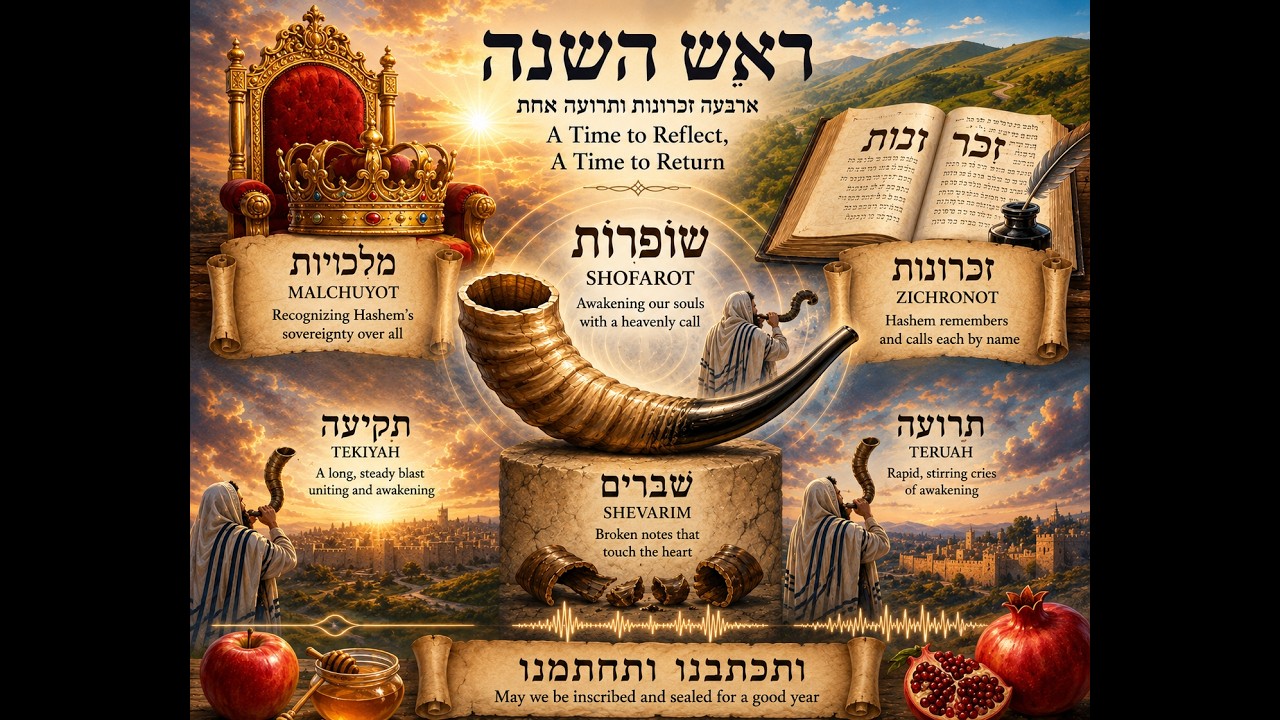
– Shofar’s Purpose: The Shofar on Rosh Hashanah confuses the Satan, preventing prosecution by signaling our eagerness for God’s judgment.
– Judgment Principle: God judges based on present actions, not future potential. This is illustrated by Ishmael’s salvation, as he was innocent at the time.
– Ben-Sorer-U’Moreh: The “wayward son” law is a theoretical lesson to stop bad habits early, not a practical command. It’s justified by the son’s inherently defective character, unlike Ishmael’s.
– Divine Scrutiny: Three actions trigger divine scrutiny: self-endangerment, expecting prayer to be answered, and asking God to judge others.
Topics
The Shofar’s Role on Rosh Hashanah
– Primary Function: To confuse the Satan and prevent prosecution.
– Mechanism: Our eager acceptance of God’s judgment signals confidence in His mercy, which disarms the Satan’s accusations.
– Consequence of Omission: A year without a Shofar blowing will end in misfortune, as the Satan is unconfused and can prosecute freely.
– Broader Significance: The Shofar also serves as a reminder of the Akedah (binding of Isaac), the giving of the Torah, and the future redemption.
The Principle of Present Judgment
– Core Principle: God judges a person based on their deeds at the time of judgment, not on future potential.
– Case Study: Ishmael (Genesis 21)
– Scenario: Ishmael was dying of thirst in the desert. Angels argued against saving him, citing the future wickedness of his descendants.
– Divine Decision: God saved Ishmael, stating, “God has heard the voice of the lad where he is.” Ishmael was innocent at that moment, so his prayer was answered.
Apparent Contradiction: The Ben-Sorer-U’Moreh
– The Law (Deuteronomy 21:18–21): A “wayward and defiant son” (glutton, drunkard) can be brought to the elders by his parents and stoned to death.
– The Contradiction: This seems to violate the principle of present judgment, as the son is punished for future potential (becoming a robber/murderer), not for his current actions.
– Resolution 1: Scope of Potential
– Ishmael: Future wickedness was distant and from descendants.
– Ben-Sorer-U’Moreh: Future wickedness is an immediate, inevitable outcome of his own character.
– Resolution 2: The “Defective Ink” Analogy
– Halacha: A Torah scroll written with disappearing ink is invalid now, even if the ink is currently visible. The ink’s formula is inherently defective.
– Application: The Ben-Sorer-U’Moreh’s character is inherently defective now, making his future crimes an inevitable consequence. He is judged for this present defect.
– Practical Application: The law is a theoretical lesson (“never happened”) to stop bad habits early, not a literal command.
Three Actions That Trigger Divine Scrutiny
– 1. Self-Endangerment: Recklessly entering danger prompts a divine assessment of one’s worthiness of salvation.
– 2. Expecting Prayer to Be Answered: Overconfidence in prayer’s acceptance triggers a review of one’s merits.
– 3. Asking God to Judge Another: Requesting judgment on someone else causes one’s own deeds to be examined first.
– Example: Sarai’s request for judgment on Abram resulted in her dying before him.
Q&A: Animal Damage & Ben-Sorer-U’Moreh
– Animal Damage: In Jewish law, the owner pays the difference in the field’s value before and after the damage, not just the value of the consumed crops.
– Ben-Sorer-U’Moreh Punishment: The stoning is a theoretical lesson to stop bad habits early, not a practical command.
Please subscribe to my channel.
Please consider sponsoring my videos by contacting me directly or through Patreon,
https://www.patreon.com/rygb









 Avodah